
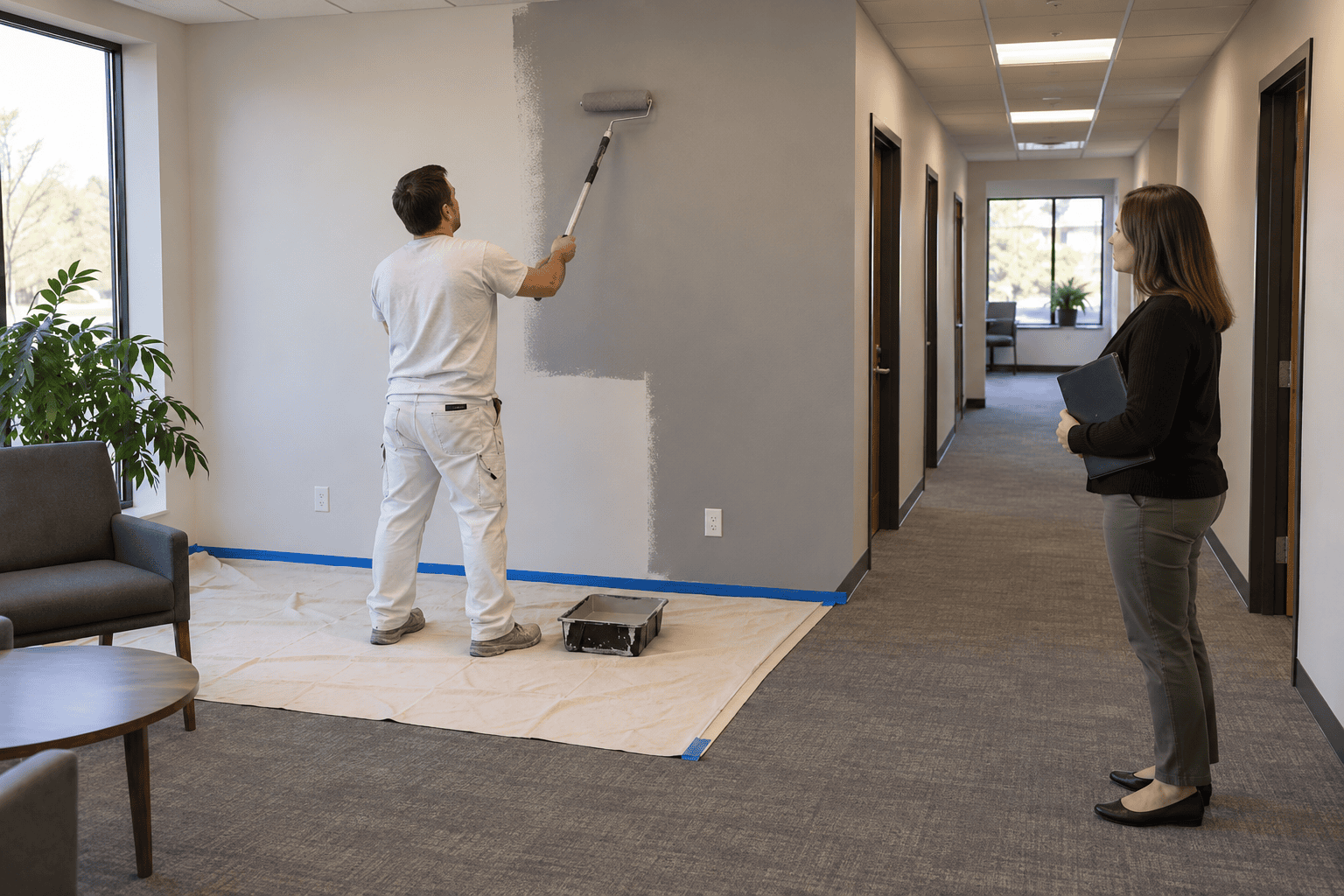
If commercial painting is on your year-end list, start by thinking about how your property needs to function while the work is underway. A Minneapolis office, St. Paul storefront, occupied apartment community, medical office, and other commercial property may all have very different access, scheduling, and operational needs.
Painting is only one part of the project. Employees may still need to work, customers may need to enter the building, tenants may need access to common areas, and deliveries or maintenance activities may already be scheduled.
A useful commercial painting plan considers those conditions before a crew arrives.
At Pearl Painting, we help Twin Cities property owners and managers plan commercial painting around the surfaces, people, and routines involved. You can begin with a list of worn areas, maintenance concerns, and upcoming scheduling commitments. From there, we can discuss a manageable scope rather than automatically treating the entire building as one uninterrupted work zone.
Define the Areas You Actually Want Painted
Start by identifying the specific surfaces that need attention.
A request to “refresh the lobby” can mean very different things depending on the property. You may want only the walls repainted, or the project may include ceilings, doors, frames, trim, railings, or other architectural details.
Create a list that distinguishes between:
- Walls
- Ceilings
- Doors and frames
- Baseboards and trim
- Common-area surfaces
- Entryways
- Hallways
- Offices
- Restrooms
- Other painted features
This makes it easier to establish the actual scope and compare estimates based on the same work.
Look for Areas Receiving the Most Wear
Commercial spaces don’t necessarily age evenly.
Entryways, hallways, elevator areas, reception spaces, and other frequently used locations may show wear sooner than quieter offices or storage areas.
Look for conditions such as:
- Scuffs and marks
- Damaged corners
- Chipped trim
- Stains
- Previous patches
- Faded coatings
- Areas exposed to carts or equipment
- Frequently touched doors and frames
Documenting those conditions helps distinguish maintenance priorities from areas where you’re simply considering a color change.
Separate Surface Repairs From Appearance Updates
Not every painting concern is purely cosmetic.
If a surface has been damaged by moisture, repeated impact, or another underlying condition, the cause may need attention before new paint is applied.
Painting over a recurring stain doesn’t necessarily address why the stain keeps appearing.
During the estimate, point out areas that have repeatedly developed problems. Ask which preparation or repairs are included and whether another issue needs to be resolved before painting proceeds.
On the other hand, if the main concern is fading, inconsistent touch-ups, or an outdated color, the conversation may focus more on how broad the repaint should be to create a consistent appearance.
Keep Product and Color Records
If your property includes multiple units, offices, hallways, or common areas, consistent paint records can make future maintenance easier.
When available, keep information such as:
- Paint manufacturer
- Product
- Color name and code
- Finish or sheen
- Areas where each product was used
A color name alone may not be enough to reproduce an older finish accurately. Products, sheen, age, lighting, and normal wear can all affect appearance.
Keeping clear records gives future maintenance work a better starting point.
Build the Schedule Around Building Operations
Commercial painting needs to account for how the property is actually used.
Before scheduling, identify the days, hours, and spaces that are difficult to interrupt.
Consider:
- Business operating hours
- Customer appointments
- Employee schedules
- Tenant access
- Move-ins or move-outs
- Deliveries
- Cleaning schedules
- Holiday closures
- Special events
- Other contractors working on the property
Sharing those details during planning gives you an opportunity to discuss phasing or other scheduling options.
Don’t assume evenings, weekends, or other off-hours are automatically included. Scheduling requirements should be discussed as part of the proposed scope.
Plan Commercial Painting in Phases When Appropriate
Some properties may benefit from dividing the work into manageable sections.
A phased project could allow one hallway, office area, floor, or common space to be completed while other portions of the building remain available.
Each phase should have clear boundaries.
Determine:
- Which surfaces are included
- When the area becomes available to the crew
- How people will move around the work zone
- Where materials and equipment can be staged
- When the area can return to normal use
- Who confirms completion before the next phase begins
A phase needs more than a start date. It needs an operational plan.
Allow for Drying and Curing
A painted wall may feel dry before the coating is ready for every type of contact.
Ask when employees, tenants, customers, furniture, cleaning crews, or equipment can return to the area.
Drying and curing depend on the selected coating and conditions.
This can be especially important for frequently touched doors, trim, railings, or other surfaces that may return to use quickly.
Cleaning schedules should also account for product-specific care instructions after painting.
Decide Who Communicates With Employees or Tenants
Commercial projects often involve more people than the painting crew and property owner.
Determine who will communicate with:
- Employees
- Tenants
- Customers
- Maintenance staff
- Cleaning crews
- Other contractors
A single project contact can help keep decisions and schedule updates consistent.
If access changes during the project, people using the building should know which areas are affected and what alternative routes are available.
Compare Commercial Painting Estimates by Scope
Two estimates with similar totals may describe different amounts of work.
Before comparing price, look at what each proposal includes.
Review:
- Surface preparation
- Repairs
- Primer
- Finish coatings
- Products
- Protection
- Access requirements
- Scheduling requirements
- Cleanup
- Final walkthrough
- Exclusions
Ask how additional repairs will be handled if conditions become visible during preparation.
A defined change process is more useful than assuming nothing unexpected can ever affect the original scope.
Prioritize When the Budget Doesn’t Cover Everything
If the full project doesn’t fit the current budget, identify which areas matter most.
A heavily used entrance, lobby, or hallway may deserve attention before a quieter office.
Phasing the work can be more practical than reducing preparation simply to cover more square footage.
Keep product and color records from the first phase so future work can be coordinated with the completed areas.
Plan the Final Walkthrough Before Work Ends
Decide who will review the finished project and compare it with the agreed scope.
During the walkthrough, review:
- Painted surfaces
- Agreed repairs
- Transitions
- Doors and trim included in the scope
- Cleanup
- Remaining touch-ups, if any
Record any remaining items clearly.
Keep final product and color information with your property maintenance records for future reference.
Frequently Asked Questions
Can a commercial property remain open during painting?
Possibly. The answer depends on the property, work areas, access requirements, products, and schedule. Phased work may allow portions of a building to remain available while other areas are being painted.
Can commercial painting be scheduled after business hours?
Scheduling options should be discussed during the estimate. Don’t assume evenings, weekends, or other off-hours are automatically included in the proposed service.
How should we prepare employees or tenants for painting?
Identify affected areas, temporary access changes, expected timing, and who will answer questions. Establishing one project contact can help keep communication consistent.
What information should we keep after commercial painting?
Keep paint manufacturer, product, color, sheen, and information about where each coating was used. These records can make future maintenance easier.
Can we paint only the highest-traffic areas?
Yes, a focused or phased project may be worth discussing. Define clear boundaries so the completed work looks intentional and future phases can be coordinated.
Plan Your Twin Cities Commercial Painting Project
Year-end commercial painting works best when the project is planned around the property rather than forcing the property to work around an undefined painting schedule.
For commercial painting in Minneapolis, St. Paul, and the surrounding Twin Cities suburbs, schedule a free estimate with Pearl Painting. Tell us which areas need attention, how your property operates, and what scheduling concerns you have. We’ll help you turn those details into a clearer painting plan.


